 Field & Home
The short answer: Tomato plants thrive in containers when given a well-draining mix, 6–8 hours of sun, correct pot volume (at least 10 gallons for indeterminate types), and a predictable feeding and pruning routine. Water deeply to wet the root ball 8–12 inches, feed every 10–14 days after fruit set, and stake or trellis vining types to maintain airflow and fruit production.
Choose the Right Variety
Choose by growth habit, days to maturity, and the space you have. Determinate or bush types are compact and finish over a few weeks, so they suit 5–7 gallon pots and gardeners who want a single concentrated harvest. Indeterminate or vining tomatoes continue producing throughout the season and need at least 10 gallons of soil volume per plant, plus vertical support; use 15–20 gallon containers if you want more consistent moisture and higher yields.
Look at days to maturity and fruit size printed on the seed packet or plant tag. Early varieties bred for speed often finish in 50–65 days; full-size slicers commonly need 70–85 days. For containers pick cultivars labeled patio, bush, dwarf, or container-friendly if you have 7 gallons or less; choose named indeterminate slicers or cherries when you can give 10–20 gallons and a 6–8 foot trellis.
If you start from seed, sow indoors 6–8 weeks before the last expected frost and harden off seedlings over 7–10 days before transplanting. Transplants should have 4–6 true leaves and sturdy stems about 6–10 inches tall; pinch back the top by one set of leaves to encourage a compact root-to-shoot balance if plants are leggy.
Determinate (Bush)
- Five to 7 gal pots, one flush harvest
- Best for: patios and single harvests
- Patio types need little staking
Indeterminate (Vining)
- Ten-plus gal with 6 to 8 ft trellis
- Best for: season-long slicing
- Sow 6 to 8 wks pre-frost, harden 7-10 d
The Ideal Soil Profile
A mix that holds moisture but drains quickly so roots get oxygen and water in balance.
Pot Size
Use at least 10 gallons (12 inches diameter, 12–18 inches deep) for one indeterminate plant to reduce watering frequency and give room for roots.
Soil Warmth
Transplant when nighttime soil temperature stays near 55–60°F; cooler soils slow root growth and increase blossom drop.
Tomatoes need a minimum of 6 hours of direct sun; 8 hours or more produces the best fruit set and sugar development.
Larger containers buffer temperature and moisture; a 15 gallon container holds roughly 3–4 times the water of a 5 gallon bucket.
Potting, Planting, and Watering
Select containers with at least two 3/8 inch drainage holes and place a 1/2 inch layer of coarse gravel or a pot-footed riser to keep holes clear. For a 10–15 gallon container use 12–18 inches of depth and 14–18 inches diameter; for 5–7 gallon pots use 10–12 inches depth. If using fabric grow bags, choose one rated for outdoor UV exposure and place them on a porous surface to allow air pruning of roots.
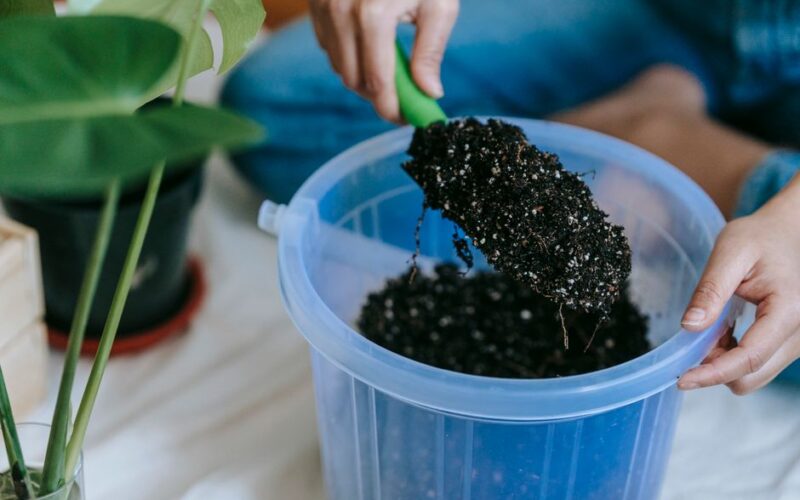
Mix the recommended soil profile in a wheelbarrow or on a tarp: for a 10 gallon pot that is roughly 12 quarts of media, measure about 5 quarts compost, 5 quarts loam, and 2 quarts perlite. Pre-moisten the mix until it feels like a wrung-out sponge, then fill pots leaving 2 inches from the rim. When transplanting, remove the lowest 2–4 inches of lower leaves and bury the stem so new roots form along the buried portion; plant deeply enough to leave the top crown 1–2 inches below the rim to allow watering without overflow.
Establish a watering routine based on pot size and weather: small pots often need water every 1–2 days in heat; 15–20 gallon containers can go 3–4 days between thorough waterings. Each deep watering should move 1–2 gallons of water into a 10–15 gallon pot until you see runoff; that typically wets the root zone 8–12 inches down. Use a moisture meter or stick your finger 2–3 inches into the soil to check: if it feels dry at 2 inches, water again. Mulch 1–2 inches thick of straw or shredded bark conserves water and reduces surface temperature swings by 5–10°F.
Feeding, Pruning, and Support
Add a slow-release granular fertilizer at planting at a rate of 1 level tablespoon per gallon of potting mix mixed into the top 2 inches of soil. After fruit set, switch to a soluble fertilizer every 10–14 days at half manufacturer strength, or follow a 5-10-10 schedule to favor fruiting over foliage; for example, mix 1 teaspoon per gallon for a weekly application or 2 teaspoons per gallon for a biweekly application depending on label guidance.
Prune indeterminate plants by removing suckers when they are 1–2 inches long to train plants onto one or two main stems. Use soft ties or strips of cloth to attach stems to a 5–7 foot stake or a twine trellis; retie loosely every 8–12 inches of growth. For determinate types, limit pruning to removing diseased foliage only and avoid removing more than 10–15% of live foliage to preserve yield.
Top-dress with 1/2 inch of mature compost at midseason (about 30–45 days after transplant) and refresh mulch if it breaks down. If blossom end rot appears on 10–20% of fruit, check calcium availability and water consistency: apply 1 teaspoon of calcium nitrate dissolved in 1 quart of water to the soil every 7–10 days for two applications while keeping soil evenly moist.
Prevent fungal diseases by avoiding overhead irrigation and spacing containers to allow 12–36 inches of air gap between pots. Remove and discard leaves with more than 25% spotting; if a plant shows progressive fungal symptoms, remove the top 1 inch of soil and replace it with fresh mix, and rotate to a new pot location the following season. Use certified disease-resistant varieties when possible to reduce chemical use.
Harvest when fruit reaches full color for the cultivar and yields slightly to gentle pressure—cherry types often ripen in 55–65 days while larger slicers commonly take 70–85 days after transplant. Pick fruit every 2–3 days during peak production to encourage more set; store ripe tomatoes at room temperature 60–70°F for best flavor and refrigerate only if you must keep them more than 5 days, letting them sit at room temperature for 12 hours before eating to restore texture.
Frequently Asked Questions
Further reading: How to Grow Kitchen Herbs in Containers · How to Grow Cherry Tomatoes in Five-Gallon Buckets
Sources: UMN Extension


2 responses