 Field & Home

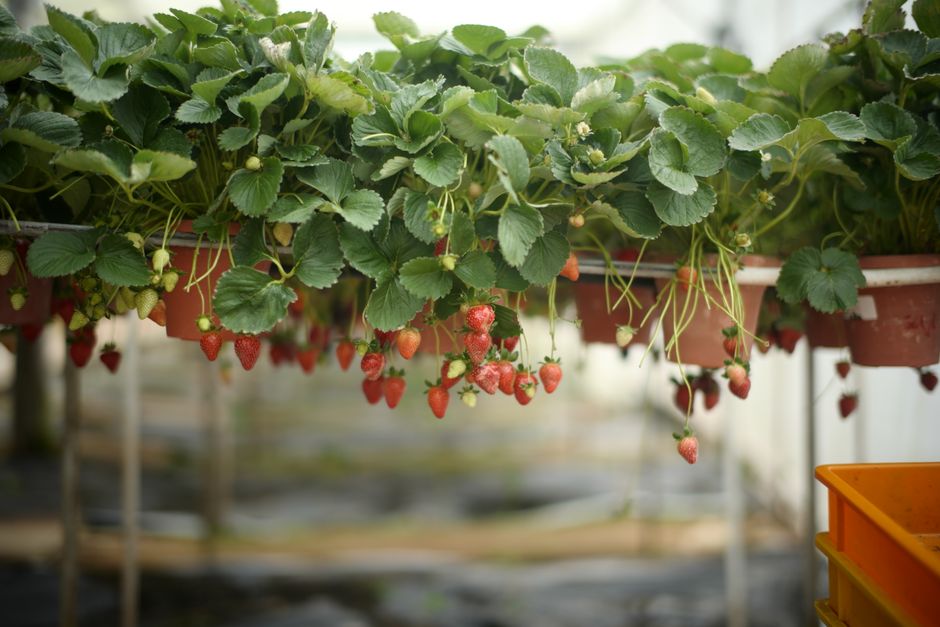
The short answer: Hanging strawberry baskets produce regular summer fruit when planted 1–3 plants per 10–12 inch basket, given 6–8 hours of sun, consistent moisture to 1 inch depth, and a feeding schedule every 4–6 weeks.
Choosing and preparing baskets
Start by picking the right container: a 10–12 inch hanging basket (25–30 cm) holds 1–3 strawberry plants and 5–8 liters of potting mix, which gives roots room without becoming waterlogged. Choose baskets with good drainage—either plastic with drain holes or wire frames with a coir liner. For a coir liner, confirm it is 1–2 cm thick and fits snugly so soil cannot wash out through the weave.
Mix your potting medium by volume: 2 parts quality loam-based potting soil, 1 part compost, and 1 part perlite or coarse sand (2:1:1). This gives a light, well-draining mix that retains enough moisture for a hanging container. For a 10–12 inch basket, measure about 5–7 liters (5–7 qt) of finished mix.
Plant spacing: set 1 plant for a 20–25 cm (8–10 in) basket, 2 plants for a 12–15 inch basket, and up to 3 plants maximum in a 12-inch basket if you keep plants compact. Place crowns so the soil level meets the base of the leaves; do not bury the crown more than 0.5 cm (1/4 in). Use transplants with a 4–6 week root system for quickest fruiting; bare-root plants may need 6–12 weeks to establish.
Step-by-step setup: (1) Line the basket or set the liner, (2) add 3–4 cm (1–1.5 in) of mix in the bottom, (3) position plants so crowns sit 1 cm above final soil line and space 8–10 cm (3–4 in) apart, (4) fill in around roots to 1 cm below leaf crowns, (5) water until 10–20% runoff to settle the soil, and (6) hang where the plants get 6–8 hours of direct sun each day.
Hardware and placement: use a hook rated for at least 10 kg (22 lb) for a fully watered 12-inch basket; lighter hooks can fail when baskets are saturated. Hang baskets where air moves freely but not in constant high wind—wind increases evaporation and can dry the basket within 6–12 hours on a hot day.
Soil amendments and starter mix tips: add 200–300 g of slow-release granular fertilizer (balanced N-P-K) mixed into 5–7 liters of potting mix at planting for a 12-inch basket, or use compost at a 1:5 ratio by volume. A 2 cm top dressing of well-rotted compost or leaf mold in mid-spring helps conserve moisture and adds slow nutrients for 6–8 weeks.
Light & Water
Light & Water
Sun plus soak plus feed on repeat: 6 to 8 hours of direct sun, water to 1 inch depth and check daily in heat, and slow-release 200 to 300 g per 12-inch basket every 4 to 6 weeks for steady summer fruit.
Care, feeding, and harvest timeline
Watering schedule: check moisture by sticking a finger 2.5 cm (1 in) into the soil; if it feels dry at that depth, water. In full sun expect to water every day during hot weather and every 2–3 days in mild conditions; aim to keep the root ball evenly moist but not soggy. Use 0.5–1 liter (0.5–1 qt) of water per plant on each watering for a 10–12 inch basket, adjusting for wind and temperature.
Practical watering techniques: for even moisture, use a small-diameter soaker tube or a 30 cm length of porous irrigation hose curled through the basket, connected to a drip line; run for 10–20 minutes at low flow (0.5–1 L/min) until the top 2.5 cm (1 in) is moist. In very hot conditions (above 30 C / 86 F) morning and late-afternoon checks are best; top-up by 250–500 ml per plant if the surface dries within 6 hours.
Fertilizing: apply a balanced granular fertilizer such as 10-10-10 at 1 tablespoon (15 g) per plant every 4–6 weeks during the growing season. Alternatively, use a water-soluble 20-20-20 at 1/2 teaspoon per gallon (2 L) every 2 weeks while flowers and fruit set, stopping heavy feed 4 weeks before the first expected frost. Avoid overfertilizing young transplants; wait 2–3 weeks after planting before the first feed.
Pruning and runners: for compact baskets, pinch off runners (long stolons) when they appear for the first 6–8 weeks to direct energy into root establishment and fruit. If you want to propagate, let 1 runner per plant root in a small pot or tray; do this after 4–6 weeks when new roots are 1–2 cm long. Trim dead leaves and spent flowers weekly to keep airflow good and reduce disease risk.
Pest and bird protection: use 0.5–1 inch (1.2–2.5 cm) mesh netting draped over the basket to deter birds during peak ripening. For slugs, set a shallow trap with 50–100 ml of beer in a saucer at soil level; replace every 48–72 hours. Inspect leaves weekly for aphids; a spray mix of 1 part mild liquid soap to 5 parts water applied to affected areas will control small infestations—rinse after 24 hours if residue is visible.
Disease prevention and sanitation: remove and discard any leaves showing more than 25% brown or spotted tissue to reduce spores. Avoid overhead watering; water at the soil level and dry foliage within 6–8 hours. Rotate the planting medium or replace the soil every 12–18 months to minimize buildup of soil-borne pathogens.
Expected harvest timeline: if you plant healthy 4–6 week-old transplants in spring, expect the first ripe berries in about 4–8 weeks, with peak production over a 4–10 week window depending on variety. Day-neutral varieties can continue producing intermittently for 3–4 months; June-bearing types usually give a concentrated 2–4 week harvest. Pick every 2–3 days during peak season; refrigerate picked berries at 1–4 C (34–39 F) and use within 2–3 days for best flavor.
End-of-season and winter care: in colder zones, move baskets under an eave or into an unheated garage when nighttime lows consistently drop below -5 C (23 F), or wrap baskets with burlap and add a 2–3 cm (1 in) layer of straw above the soil to insulate roots. In mild climates, reduce watering to once every 10–14 days and cut back foliage to 2–3 cm above crowns in late fall to reduce rot.
Repotting and refresh schedule: plan to refresh or replace the potting mix every 12–18 months. To repot, remove 30–50% of the old soil, top up with a fresh 2:1:1 mix, and trim older plants back by one-third to stimulate new growth; this keeps baskets productive for successive seasons.

Frequently Asked Questions
Further reading: Easiest Vegetables for First-Time Container Gardens · How to Grow Kitchen Herbs in Containers
Sources: UMN Extension


