 Field & Home
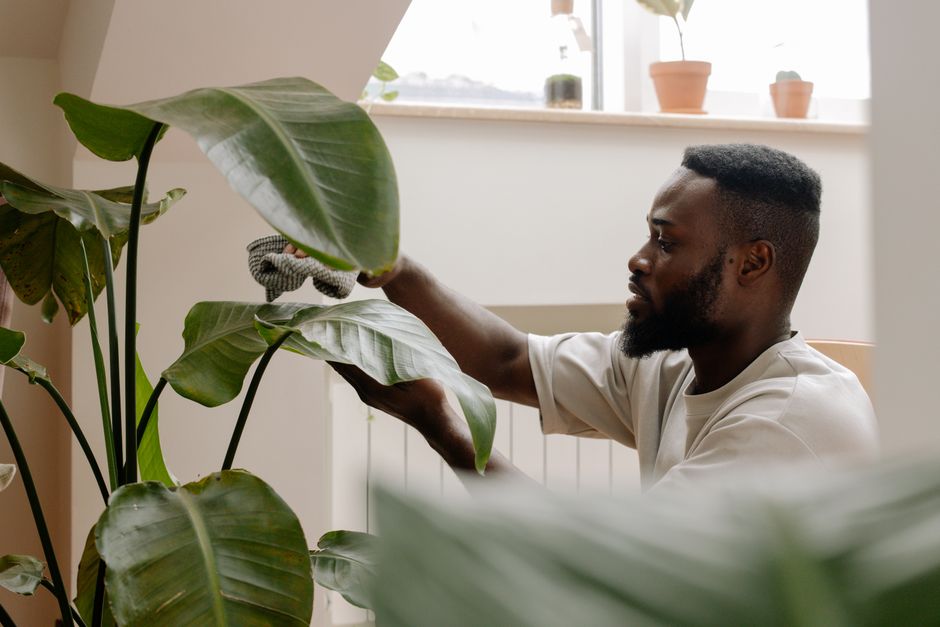
The short answer: Wipe or rinse gently: use a soft microfiber cloth or a lukewarm shower, support the leaf with one hand, and clean every 2 to 4 weeks to restore up to 30 percent of light capture which dust can block.
Why clean big leaves
Large-leaved houseplants like fiddle-leaf figs, rubber plants, and many aroids trap more dust simply because each surface is bigger. Dust blocks pores and light, reducing photosynthesis; light capture can fall by as much as 20 to 30 percent when heavy dust builds up, making plants stretch and slow growth.
Beyond light loss, dust holds humidity and can harbor fungal spores or pests that begin on the leaf surface. Cleaning is also preventive maintenance: spending about 5 to 15 minutes per plant every few weeks keeps pests and disease risk lower and helps you spot early signs of stress such as brown edges or scale.
Finally, gentle cleaning improves transpiration and air exchange. For a large 30 to 60 cm leaf, a single slow pass with a damp cloth takes roughly 20 to 60 seconds per side; plan about 10 to 30 minutes for a cluster of medium-large plants in a living room.
“I always support the leaf at the base with one hand and clean with the other; it prevents tearing and reduces pressure on the petiole.”
—

Step-by-step cleaning methods
Gather tools: a soft 30 cm microfiber cloth or a soft paintbrush, a spray bottle, lukewarm water at about 25°C, and an optional mild soap solution mixed at 1 teaspoon per liter (roughly 5 ml per 1 L) or about 1 drop of dish soap per 240 ml cup. Avoid concentrated cleaners, alcohol, and oil-based leaf shines that block stomata.
Method A — Dry-dusting for lightly dusty leaves: hold the leaf near the stem with one hand and use a folded microfiber cloth to wipe from base to tip in one smooth motion. For a single large leaf expect 15 to 30 seconds; repeat on the underside if dusty. Wash the cloth after 3 to 5 leaves in hot water and let it air dry.
Method B — Damp wipe for moderate dust: mist the cloth lightly (not the leaf) with lukewarm water or the diluted soap mix. Wring the cloth so it is damp but not dripping, then support the leaf base and wipe along the grain. Rinse the cloth every 2 to 3 wipes to prevent smearing grit back onto the surface. For a leaf 30 to 50 cm long, one pass per side is usually sufficient.
Method C — Shower rinse for heavy dust or multiple plants: place plants in a tub or shower on a low tray and use a gentle spray at low pressure for 30 to 90 seconds per plant, keeping water temperature close to ambient room temperature (about 20 to 25°C). Let plants drain in a bright, shaded spot, allowing them to dry for 1 to 4 hours before returning to direct sun to prevent scorching from trapped water droplets.
Spot-clean stubborn grime: mix 1 teaspoon of mild liquid soap per liter of water. Dip a corner of the cloth, work a small section, then rinse the cloth and wipe again with plain water to remove residue. For sticky residues allow the solution to sit for 10 to 30 seconds, then gently lift; never scrub hard or use a scouring pad.
Special cases: succulents with waxy leaves should be wiped dry only with a soft brush or cloth and should not be soaked; plan 2 to 3 quick brush passes per month. For hairy or velvet leaves, such as African violets, avoid wetting the surface; use a soft artist brush and 3 to 5 light strokes per side. For thin or brittle leaves support the entire petiole and limit contact to 10 to 20 seconds to avoid tearing.
Aftercare: let leaves dry fully for at least 30 minutes in still air before moving plants back to bright windows; if humidity is high, allow up to 4 hours. If you used a mild soap, a final plain water wipe prevents film buildup; that extra rinse adds just 1 to 2 minutes per leaf but improves long-term leaf health.
Frequency guideline: check and lightly dust once every 2 weeks in dusty homes, or every 4 weeks in low-dust conditions. For plants in kitchens or high-traffic rooms, increase to once per 1 to 2 weeks because grease and particulates accumulate faster near cooking areas.
Warnings: do not use oil-based products or household polishes that claim to make leaves shiny; they coat the surface and can block stomata. Avoid cold water shock; never use water more than 10°C colder or hotter than your room temperature, and avoid full sun immediately after cleaning.

Frequently Asked Questions
Further reading: Why Do Container Plants Dry Out Every Afternoon? · Six Humidity-Loving Plants for Bathrooms
Sources: UMN Extension