 Field & Home

The short answer: Humidity-loving plants make bathrooms greener with minimal fuss; aim for 50–80% humidity, bright indirect light, well-draining soil, and a 4–8 inch pot for most species.
Bathroom care basics
Bathrooms offer a unique microclimate: regular spikes in humidity from showers, often limited direct sun, and fluctuating temperatures. Many common houseplants that prefer moisture will do well here if you match light, moisture, and root aeration. Target relative humidity of 50–80 percent for true humidity lovers like ferns and peace lilies. Room temperature between 65 and 75°F keeps growth steady; avoid chilling below 55°F for tender tropicals.
Potting mix matters: use a peat- or coconut-coir-based mix with added perlite or pumice at a ratio of roughly 2 parts loose peat to 1 part perlite to improve drainage while retaining some moisture. Choose containers with drainage holes; typical bathroom pots are 4–8 inches diameter for small to medium plants. Water by checking the top 1 inch of soil: water thoroughly when that inch is dry, which for many bathroom plants will be every 5–10 days depending on shower frequency and ventilation.
Placement is key. Put plants 1–3 feet from a north- or east-facing window for bright indirect light; if light is very low, mount them higher where indirect light from a shower window reaches them, or use a 10–20 watt full-spectrum LED grow strip for 6–8 hours daily. Avoid direct hot sun on leaves and keep plants 6–12 inches away from steam vents to prevent fungal splashes onto leaves.
Bathroom care at a glance
Humidity, pots, and light numbers for wet rooms.
Drain every watering
Water to full drainage, empty the saucer after 10 minutes, and repeat about every 5 to 7 days.
Strip 6 to 8 hours
A 10 to 20 watt full-spectrum strip 6 to 8 hours daily covers windowless bathrooms.
Ferns and lilies hold color between 50 and 80 percent relative humidity.
Two parts loose peat to 1 perlite drains yet holds shower moisture.
One to 3 feet from north or east glass gives bright indirect without scorch.

Six best humidity-loving bathroom plants
Boston fern (Nephrolepis exaltata) is a classic bathroom fern that prefers bright indirect light and consistent moisture. Use a 6–8 inch pot with an evenly moist, peat-heavy mix and good drainage. Water until water flows from the drainage holes, then empty the saucer after 10 minutes; repeat roughly every 5–7 days in an active bathroom environment. Increase humidity by placing the pot on a pebble tray with 1/2 inch of water below the pot base or group with other plants; misting 2–3 times per week helps new fronds unfurl without drying.
Maidenhair fern (Adiantum spp.) thrives on humidity but is more sensitive to dry air and hard water. Pot in a 4–6 inch container using a 2:1 peat to perlite mix, and water with room-temperature, filtered or distilled water every 3–6 days to keep soil evenly moist but not waterlogged. Avoid fertilizer in winter; feed with a diluted 1/4-strength balanced liquid fertilizer every 4–6 weeks during spring and summer growth. Trim brown fronds back to the crown every 4–6 weeks to promote new growth.
Birds-nest fern (Asplenium nidus) tolerates lower light and enjoys the humidity of a shower stall. Use an airy mix with 1 part orchid bark to 2 parts peat to help the crown breathe. Water at the soil level when the top 1 inch dries, usually every 7–10 days, and wipe the central cup clean every 2–4 weeks to prevent trapped water from stagnating. Mounting on a humidity-retaining substrate or keeping it on a pebble tray increases vigor during dry spells.
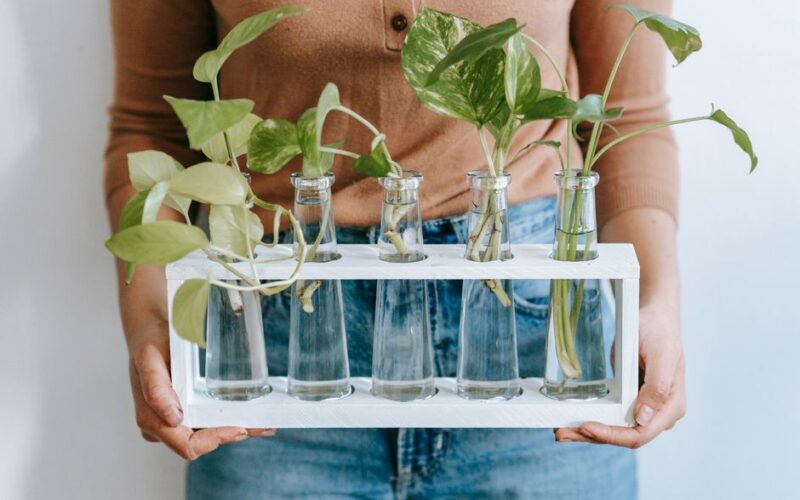
Pothos (Epipremnum aureum) is an adaptable trailing plant that benefits from bathroom humidity but will also tolerate lower moisture. Plant in a 4–6 inch pot with a looser potting mix (peat:perlite 2:1). Water every 7–10 days or when the top 1–2 inches dry; propagation is easy by stem cuttings 4–6 inches long placed in water, where roots typically appear in 10–14 days before potting into soil. Rotate the pot every 2–3 weeks so all sides receive light and prevent legginess.
Peace lily (Spathiphyllum) loves steamy conditions and blooms with enough indirect light. Use a 6–8 inch pot and a moisture-retentive but aerated mix—2 parts peat to 1 part perlite—and keep consistently moist, watering about every 5–8 days depending on humidity. Expect new spathes to appear in 4–8 weeks during active growth when given 12–16 hours per day of ambient light or indirect window light. Trim spent flowers at the base and repot every 12–18 months to freshen soil and encourage blooms.
Spider plant (Chlorophytum comosum) tolerates humidity spikes and often produces plantlets that root readily. Plant in a 4–6 inch pot with all-purpose potting mix amended with 1 part perlite for drainage. Water every 7–10 days or when the top 1 inch dries, and remove brown leaf tips with scissors to maintain appearance. Propagate by cutting plantlets when they have 1–2 inches of roots and potting into a 3–4 inch container; roots usually establish in 2–4 weeks.
For all these species, consider bathroom ventilation. If showers keep humidity elevated for more than 2 hours after use, open a small window or run an exhaust fan for 15–30 minutes after showering to prevent mold growth in soil and on surfaces. During winter, when indoor heating drops humidity, run a small humidifier for 1–3 hours in the morning and evening or use a pebble tray and frequent misting to maintain the 50–70% range needed by most tropicals.

Frequently Asked Questions
Further reading: Why Do Container Plants Dry Out Every Afternoon? · Snake Plants: The Indestructible Beginner Guide
Sources: UMN Extension

3 responses