 Field & Home
The short answer: A quick one-hole test tells you whether soil drains fast, slowly, or not at all: dig a 2-inch by 6-inch hole, saturate it, and time how long the water level drops. Use the result to pick amendments, create a 12-inch raised bed, or install a 1% slope for proper runoff.
Simple Drainage Check
Soil drainage affects root health, planting choices, and how often you water. The one-hole test is a hands-on method you can complete with basic tools and minimal time. It reveals percolation speed in the planting zone so you can decide whether to improve soil structure, choose tolerant plants, or build raised beds.
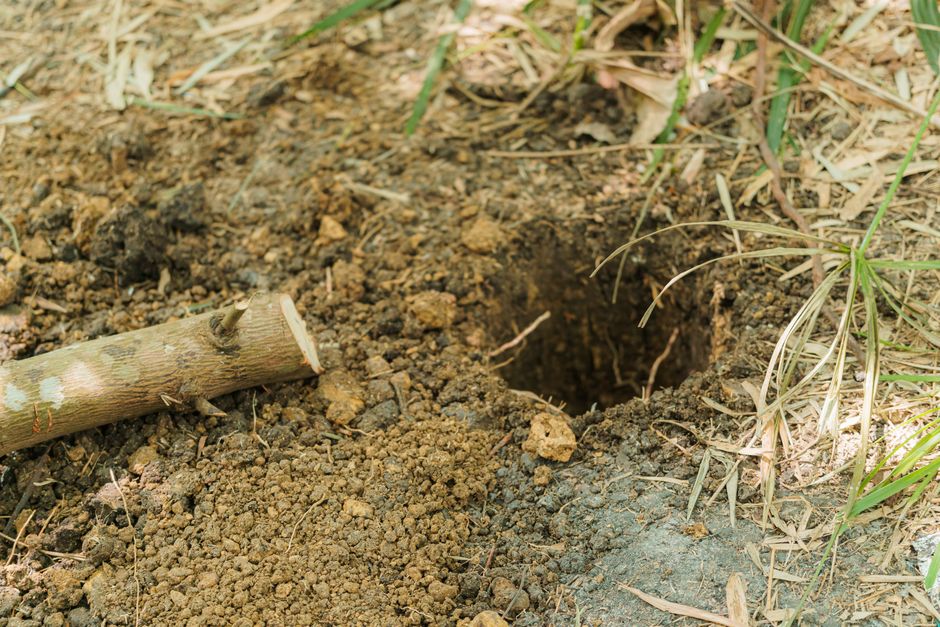
Prepare to dig a hole about 2 inches (5 cm) in diameter and 6 inches (15 cm) deep. Those dimensions fit most annual and perennial root zones and give a reliable measure of how quickly water leaves the root area. You can scale to 4 inches by 12 inches for tree or shrub sites, but the 2×6 size is ideal for garden beds.
Perform the test on a day when the soil is not frozen; best practice is to wait 24 hours after a heavy rain so surface runoff has stopped and you measure the soil’s inherent drainage rather than immediate saturation from storm events.
Tools and materials
Holes, waits, and rates that read your soil.
Pre-soak 10 minutes
Fill, wait 10 minutes, refill to rim, then log drops every 10 to 15 minutes per inch.
Sample 2 to 4 spots
Two spots per 10-by-10 bed 5 feet apart, every 100 sq ft on big ground.
Fast drainage
- Under 30 minutes per inch drop
- Best for: most veggies and perennials
- Mulch to slow summer drying
Slow drainage
- Hours per inch or 24 h standing
- Best for: raised beds and bog plants
- Amend structure or build up

Step-by-step Test
Step 1: Choose 2–4 representative spots in the bed or lawn to test. For a 10-by-10 foot bed, test at least 2 spots separated by about 5 feet; for larger areas test every 100 square feet. This sampling helps you find pockets of clay or sand that vary across the site.
Step 2: Dig the hole. Use a trowel or small shovel to make a vertical-sided hole 2 inches (5 cm) wide and 6 inches (15 cm) deep. Measure depth with a tape: mark 6 inches on the tool or use your thumb as a guide (adult thumb ~1 inch) to avoid guessing.
Step 3: Soak the hole. Fill the hole with clean water until it is full and let it stand for 10 minutes to pre-saturate the surrounding soil; this prevents dry soil from absorbing the first pour and skewing results. After 10 minutes, refill to the rim and start your timer.
Step 4: Record the drop. Note the initial water depth and time, then check the water level every 10 or 15 minutes and record how far it has fallen. If the level drops 1 inch within 30 minutes, drainage is fast; if it drops slowly over 30–240 minutes it’s moderate; if water remains after 24 hours it’s poor.
Step 5: Interpret the results and plan action. For fast sites (under 30 minutes per inch) you can plant most species and reduce irrigation frequency. For moderate sites (30–240 minutes) improve soil with organic matter: incorporate 20–30% compost by volume into the top 6–8 inches, or build a shallow raised bed 6–8 inches high.
Step 6: Fixing very poor drainage. If water still stands after 24 hours, use one of three options: 1) build a raised bed at least 12 inches (30 cm) tall and fill with a mix of 60% topsoil and 40% compost, 2) install a French drain or tile with a minimum slope of 1% (about 1 inch drop per 8 feet) to carry water away, or 3) import drainage-friendly soil and replace the top 12–18 inches (30–45 cm) in planting zones.
Troubleshooting: If you add sand to clay, mix at large scale. A small sprinkle of sand can worsen compaction; if using sand, blend a minimum of 30% coarse sand by volume with the clay and at least 30% organic matter to avoid creating a cement-like mix.
Retest after amendments. Wait at least 2–4 weeks after incorporating compost to allow the soil to settle, then repeat the one-hole test to confirm improved percolation. For structural fixes like pipes or regrading, plan for contractor estimates and allow 1–2 days of work for moderate yard projects.

Frequently Asked Questions
Further reading: Five First-Year Garden Mistakes and How to Avoid Them · How to Read a Seed Packet Like an Experienced Gardener
Sources: UMN Extension