 Field & Home

Timing, Rootstock, and Tree Selection
Bare-root apple trees arrive dormant with the soil shaken from their roots, and that dormancy defines the entire planting calendar. Order from nurseries in December or January for the widest selection, and plant as soon as the ground can be worked in late winter or early spring, typically 4 to 6 weeks before the last expected frost. The tree must go in while still fully dormant; buds that have begun to swell or silver signal that the window is closing, and a tree planted after bud break transpires water its bare roots cannot yet replace.
Rootstock, not variety, determines the mature size of your tree, so choose it before falling in love with a fruit name. M27 holds a tree to roughly 8 feet and suits containers and narrow borders, M9 reaches about 10 feet and bears fruit earliest, MM106 settles near 16 feet for a generous family orchard row, and seedling rootstock runs to 25 feet or more with a decade of waiting before first apples. Dwarfing stocks like M27 and M9 have brittle root systems and require a permanent stake plus reliable irrigation for the life of the tree.
Inspect every tree before it leaves the nursery or the shipping box. Roots should feel pliable and smell earthy, with no blackened tips, no circling congestion, and no cracked or oozing graft union; the union itself should show a smooth, fully callused ridge. A feathered maiden carrying four or five lateral branches will outproduce an unbranched whip by roughly a year of harvest, so pay the small premium when available. Until planting day, keep roots wrapped in damp sawdust or wood shavings in a cool space held between 34 and 40°F.
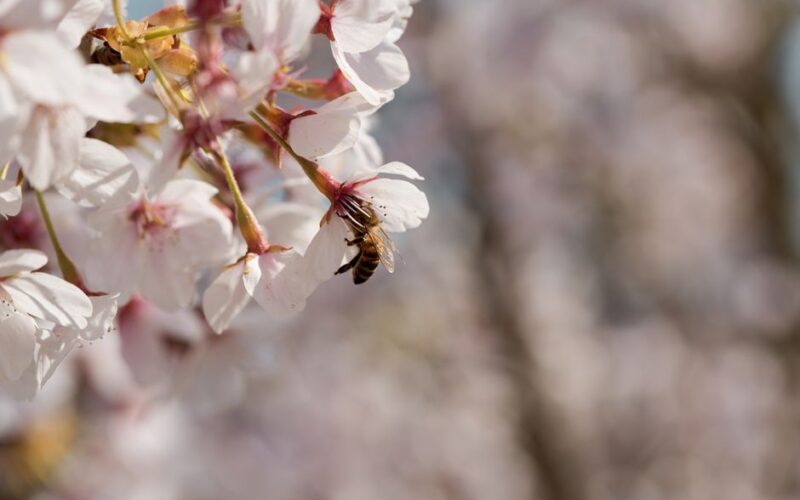
Most apple varieties cannot set fruit from their own pollen, so plan pollination before planting rather than after a barren third season. Place a compatible partner of a different variety but overlapping bloom group within 50 to 100 feet, or rely on a flowering crabapple nearby, which sheds abundant pollen over a long window and serves as a universal pollinizer. A few varieties, including Golden Delicious, set a light crop alone but still produce heavier and more even yields with a partner present.
Bare-Root Stock
- Purchase cost: 30 to 45 dollars per tree
- Planting window: dormancy only, about 8 weeks
- First-year growth: faster, no circling roots
Container-Grown Stock
- Purchase cost: 60 to 90 dollars per tree
- Planting window: any time ground is workable
- First-year growth: slower if roots were pot-bound
The Planting Hole Specification
Dimensions and limits for setting a bare-root apple tree.
Graft Union
Keep the union visibly above the final soil line on all dwarfing stocks.
Soil Readiness
Plant once soil holds 45°F and crumbles instead of clumping.
“A bare-root tree forgives almost everything except a hole dug too small and a union buried too deep.”
— Margaret Hale, orchardist at Field & Home
Digging the Hole and Setting the Tree
Soak the root bundle in a bucket of plain water for 6 to 12 hours before planting, never longer than 24, since waterlogged roots suffocate. While roots soak, dig a hole twice as wide as the fully spread root system and only as deep as needed to set the graft union 2 inches above the final soil grade. Roughen slick walls with a spading fork if the hole glazed over during digging, and mound a firm cone of backfill in the center to the height the roots will drape over.
Trim any torn or broken roots back to clean tissue with sharp pruners, then spread the remaining roots evenly over the soil cone so none kink or circle. Backfill in 3-inch lifts with the soil you removed, amending no more than 20 percent of the volume with compost so roots push outward into native soil instead of circling in a rich pocket. Hold the tree upright at the correct height while you work, and flood the hole halfway with water once backfill reaches half depth to settle air pockets into a mud slurry around every root.
Skip fertilizer at planting entirely; concentrated salts scorch young root tips, and a dormant tree cannot use the nitrogen until leaves unfold anyway. Finish by applying the 3-3-3 mulch rule: a ring of coarse wood chips 3 inches deep, 3 feet in diameter, held 3 inches away from the trunk so bark stays dry and rodent damage stays unlikely. Stake only dwarfing rootstocks or trees in exposed, windy sites, using two loose ties that allow an inch of sway, and remove all staking after 12 to 24 months so the trunk builds proper taper.
Watering discipline carries the tree through its first season: deliver 5 gallons per week for every inch of trunk caliper in one slow soak, roughly double that during stretches above 90°F. In the first spring, head the central leader back by about a third to an outward-facing bud and remove any branch forming narrower than a 45-degree angle with the trunk. Expect dwarf trees to show first blossom spurs in their second or third leaf, and thin those earliest clusters to one fruit per cluster so the tree invests in framework rather than crop.
Frequently Asked Questions
Further reading: How to Espalier Apple Trees Against a Sunny Fence · How Many Fruitlets to Leave on Apple Clusters
Sources: UMN Extension