 Field & Home
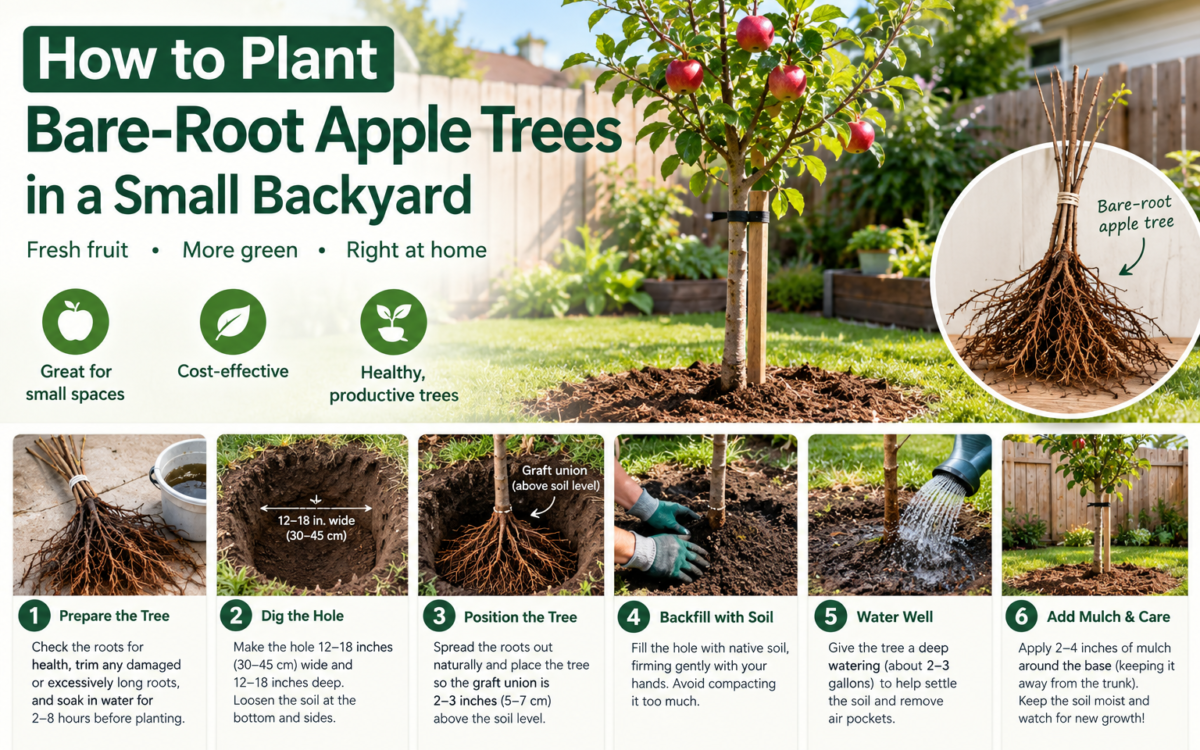
The short answer: Bare-root apple trees are easiest planted while fully dormant in late winter. Pick a sunny, well-drained spot, choose a dwarf or semi-dwarf rootstock for small yards, set the graft union 2–3 inches above final soil level, water deeply to soak the root zone, mulch 2–3 inches away from the trunk, and plan structured pruning and training within the first 12 months.
Choose the Right Variety
Start by selecting cultivars and rootstocks that match both space and taste. For compact yards prioritize dwarf rootstocks such as M.9 or M.27 (mature height ~6–10 ft) or semi-dwarf rootstocks such as M.26 (mature height ~12–16 ft); list the expected mature height and planting footprint when you buy so you can plan spacing.
Decide pollination strategy: many dessert apples are partially self-fertile but yields improve with cross-pollination; plant compatible varieties within 25 feet and overlap bloom windows by at least 7 days. Check disease resistance scores for scab and fire blight—picking 1–2 resistant cultivars will cut spray and maintenance time in half on a small site.
Soil and Site Quick Guide
What to look for in a small backyard site.
Microclimate
Choose a south or southwest-facing spot for added heat; a 2–4°F warmer microclimate helps ripening.
Drainage Test
Dig a 12-inch hole and fill with water; if it drains within 4 hours the site is adequate.
Dwarf Rootstocks
- Mature height: 6–10 ft
- Best for: patios, narrow alleys, close spacing
- Root vigor: shallow, requires staking early
Semi-dwarf Rootstocks
- Mature height: 12–16 ft
- Best for: small yards with room for 1–2 trees
- Root vigor: deeper, less stake-dependent
“Plant bare-root apples while fully dormant for the cleanest start; you get better soil contact and faster root reestablishment than with balled trees.”
— A. Rivera, Pomologist at Field & Home
Keep the graft union 2–3 inches above soil to limit suckers.
Position trees for 6–8 hours of full sun for good fruiting.
Prepare and Plant Correctly
Timing: plant bare-root apple trees in late winter to very early spring while buds remain fully dormant, typically 4–6 weeks before your average last frost. Planting in that window gives roots 2–6 weeks to start growing before leaf-out; in colder zones delay until the last 4 weeks before average last frost to avoid freeze heaving.
Transport and handling: keep roots moist and cool in transit by wrapping them in damp burlap or packing with slightly damp wood shavings; do not allow roots to dry for more than 8 hours. If you must hold plants for more than 24 hours, heel them into a shaded trench with 1–2 inches of loose soil over the roots and keep covered and watered.
Step-by-step planting: dig a hole roughly twice the width of the root spread and 12–18 inches deep so the roots can spread horizontally. Form a shallow cone of native soil in the center, spread roots evenly over it, and position the crown so the graft union sits 2–3 inches above final soil level. Backfill with native soil mixed at most 20% compost; excessive amendment creates a pot-like pocket that discourages outward root growth.
Initial irrigation and settling: firm soil gently by foot to remove large air pockets but do not compact. Create a 6–12 inch wide water basin and give a deep initial soak of 2–4 gallons per tree depending on root size; expect to wet the root zone to 12–18 inches. Check for settling after one week and add soil if the crown has sunk toward the root collar.
Staking and anchoring: for dwarf trees drive a 2×2 or treated post 24–30 inches into firm ground about 6–8 inches from the trunk on the windward side. Secure the tree with a flexible tie 6–12 inches above the root collar, allowing 1–2 inches of movement; remove the stake after 12–24 months for dwarf rootstocks and 24–36 months for semi-dwarf once the tree stands without lean.
First-year care and pruning: water deeply every 7–10 days in average spring and summer, increasing to every 3–5 days during heat above 85°F. Prune in the first dormant season by reducing a whip to 24–36 inches and selecting 3–4 evenly spaced scaffold buds; thereafter cut back about 20–30% of new annual growth the first two winters to stimulate laterals and a strong scaffold framework.
Protection and maintenance: apply mulch 2–3 inches deep, keeping it 2–3 inches clear of the trunk to avoid collar rot. Install a 12–18 inch tree guard to deter voles and rabbits, and wrap trunks the first winter if the south side receives reflected sun to prevent sunscald. Check ties monthly and adjust; tighten or loosen guy wires as needed and replace any damaged tree guards within 12 months.
Nutrition and thinning: do not overfertilize the first season; apply a light top dressing of 1/2 cup balanced granular fertilizer (10-10-10) in late spring only if growth is weak, and repeat no more than once that year. Thin fruit in year two onward to maintain a ratio of roughly 1 fruit per foot of branch—this helps prevent limb breakage and directs carbohydrate allocation to roots and structure.
Frequently Asked Questions
Further reading: How to Prune Apple Trees · Why Do My Apple Trees Have Scabby Spots? Organic Fixes
Sources: UMN Extension