 Field & Home
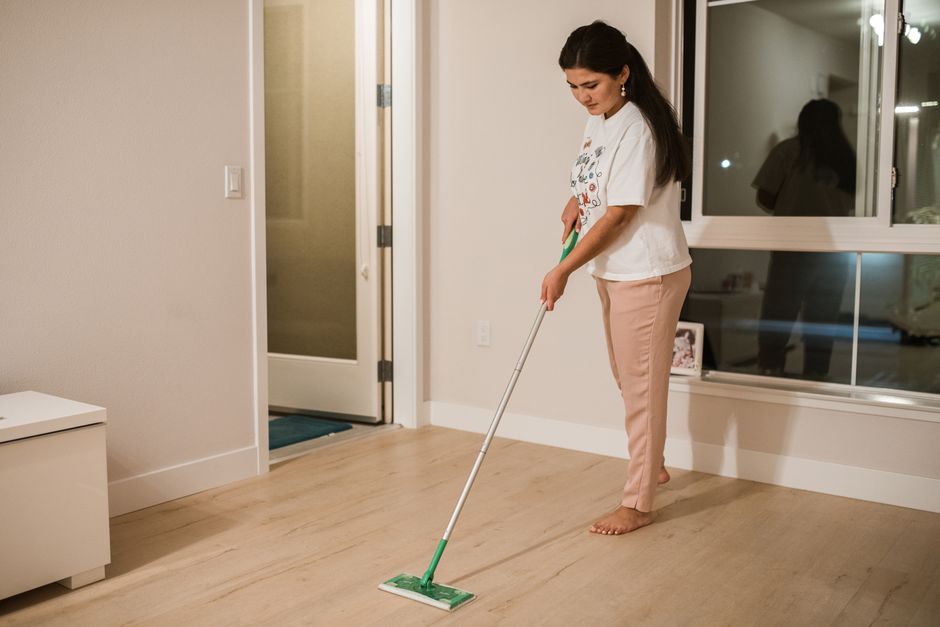
The short answer: Keep floors barely damp: use a pH-neutral cleaner at the right ratio, work in small sections, and finish with a plain-water rinse and quick drying to avoid streaks or sticky residue.
Prep and Supplies
Start by removing loose grit and dust: vacuum with a soft brush head or sweep with a fine-bristle broom. For a 200 to 400 square foot room, run the vacuum once across the grain and once with the grain to catch fine particles that will otherwise be pushed by the mop and leave streaks.
Gather a flat microfiber mop head (18 to 24 inches works well for most rooms), two buckets or a spray mop, and a lint-free cloth for edge work. Use microfiber pads rated for wet use; a plush cotton pad will trap water and leave more residue.
Choose a cleaner labeled pH-neutral for hardwood or engineered wood. A reliable dilution is 1:16 by volume for concentrated cleaner to warm water, which equals 1/4 cup (60 ml) of cleaner per 1 gallon (3.8 L) of water. Avoid oil soaps, wax-based products, or straight vinegar more than once a quarter; these build up and attract dirt.
Test any cleaner in a 2-inch by 2-inch inconspicuous area and wait 24 to 48 hours to confirm no finish change. If the finish dulls or feels tacky after 48 hours, stop and try a different product or a milder dilution.
If you have pets, do an initial pass with a rubber broom or pet-hair tool: make 3 to 5 passes along the grain to lift fur before vacuuming. For rooms over 300 sq ft consider splitting the space into three zones and tackle one zone at a time to keep the pad from loading up.
Plan your pad care: machine-wash microfiber pads after every 2 to 3 uses or immediately if they pick up greasy residue. Wash cold, use no fabric softener, and tumble low or air-dry; replace pads after about 150 to 200 wash cycles to maintain absorbency and reduce streaking risk.
Keep the room temperature moderate while cleaning—ideally 60 to 80°F (15 to 27°C)—and humidity below 60% so surfaces dry within 15 to 30 minutes. If drying will be slow, open a window or run a fan for 10 to 30 minutes after rinsing to avoid mineral deposits forming as water evaporates.
Why residue forms
Dilution, pads, and tests that prevent haze.
Sections 4 by 6 feet
Mop 4 by 6 ft zones so pads never overload; split 300-plus sq ft rooms into thirds.
Patch-test 2 by 2 in
Test 2 by 2 inches and wait 24 to 48 hours; tacky means new product or weaker mix.
“Use only enough liquid to wet the pad; overly saturated mops push solution into seams and leave a film. A nearly dry microfiber pad gives the cleanest finish.”
—
Mop Technique and Aftercare
Work in small, manageable sections: 4 by 6 feet is a practical area for an 18″ pad. This size keeps the pad from getting overloaded and lets you control drying. For a 300 square foot room you will typically cover one section every 2 to 3 minutes with a lightly damp pad.
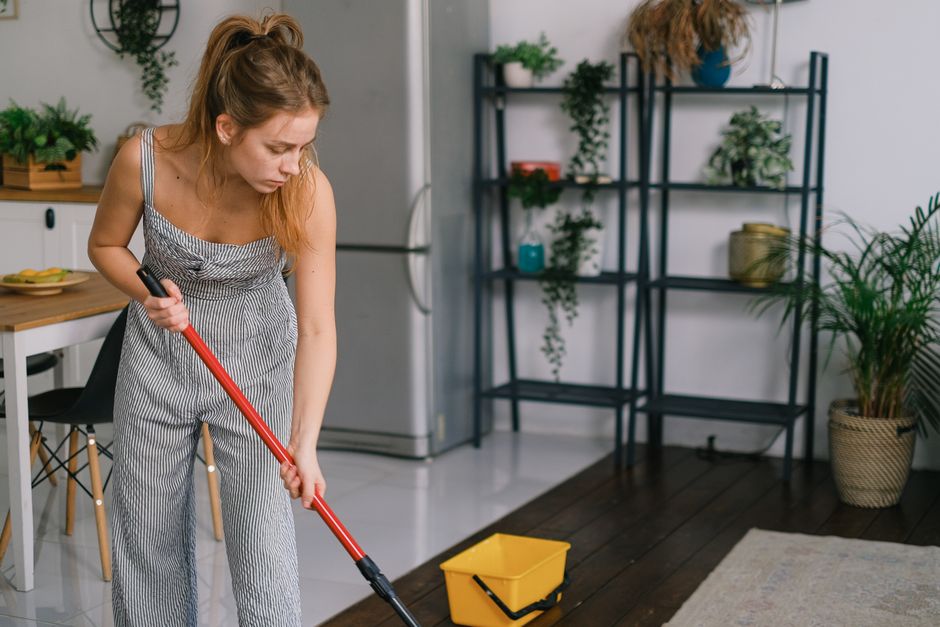
Prepare your solution in a bucket or spray bottle. For a bucket and flat mop, dip and wring the pad until it is damp but not dripping — you should be able to squeeze out at most 2 to 4 ounces (60 to 120 ml) of solution from the pad when compressed. Excess water increases the chance of streaking and can force cleaner into seams.
Use a two-bucket method for whole-room cleaning: one bucket holds the diluted cleaner, the other plain warm rinse water. After mopping a section, dunk the pad in the rinse bucket, wring thoroughly to remove 90% of the picked-up soil, then return briefly to the cleaner bucket before continuing. Change rinse water every 150 to 200 square feet or when it looks cloudy.
Mop along the grain when possible, using straight, overlapping passes. Rinse the pad or change to a clean side every 50 to 100 square feet. If you need to handle edges and baseboards, fold the pad to a 3 to 4 inch corner and run it along the base at a 30-degree angle to catch dirt without saturating seams.
After you finish the cleaning passes, do a final rinse: go back over the floor with a fresh microfiber pad dampened only with plain warm water (no cleaner) to lift any remaining detergent or mineral residues. For hard-water areas, use distilled or filtered water for this final pass to avoid white film; expect small rooms to air-dry in 15 to 30 minutes under normal ventilation.
For localized sticky spots, apply a small amount of diluted dish soap (about 1 tablespoon per gallon) to a microfiber cloth, gently rub the spot, then immediately rinse with plain water and dry. For heavier build-up, you can use a stronger pH-neutral solution diluted at 1:8, let it sit for 2 to 3 minutes, agitate gently with a soft nylon pad, then perform two full plain-water rinses to be sure no cleaner is left behind.
When finishing, buff dry high-traffic transition areas with a clean, dry microfiber cloth in 6- to 12-inch circular motions to remove any last trace of moisture and accelerate drying. Schedule a deeper maintenance clean every 3 to 6 months depending on traffic: this may include a full rinse with plain water or a professional finish refresh for worn areas.
Hard water and minerals
Mineral water rules for spot-free drying.
Cold wash, no softener
Wash pads every 2 to 3 uses cold with no softener, tumble low; grease loads wash at once.
Rubber-broom first when furry
Three to 5 grain passes lift pet fur before the vacuum ever touches 200 to 400 sq ft.
spray-mop
- Mist-and-go for daily touch-ups
- Best for: small spills between deep cleans
- Light pads load fast past one zone
two-bucket method
- Two buckets separate wash and rinse
- Best for: whole rooms with real soil
- Rinse water stays out of the mix
Frequently Asked Questions
Further reading: How to Remove Sticker Residue from Glass and Plastic · How to Deep-Clean a Small Bathroom in Under Ninety Minutes
Sources: EPA Safer Choice