 Field & Home

The short answer: A focused ninety-minute plan lets you deep-clean a small bathroom top to bottom with five basic supplies and a simple zone order: declutter, pre-soak, scrub, rinse, and floor last. Work in 8-20 minute blocks so you finish without re-cleaning surfaces.
Prep and Prioritize
Begin with a 5-minute walk-through and set a 90-minute timer. Open a window or run the exhaust fan and remove bathmats, towels, and any laundry to avoid re-soiling cleaned surfaces and to give you clear access to floors and fixtures.
Gather a compact kit you can carry: one 24-oz spray bottle of all-purpose cleaner, one 16-oz bottle of disinfectant or diluted bleach, a medium scrub brush (2-3 inch head), 2-3 microfiber cloths (12×12 inches), a grout brush or old toothbrush, and a mop or disposable floor wipes. Use a small caddy or bucket so you save an estimated 8-12 minutes by avoiding back-and-forth trips.
Declutter surfaces for 7-10 minutes: group daily toiletries on a tray, store extras in a cabinet, and toss expired items into a small trash bag. Clearing counters and shower caddies first means cleaners contact grime, not product bottles, cutting actual scrubbing time by roughly one-third.
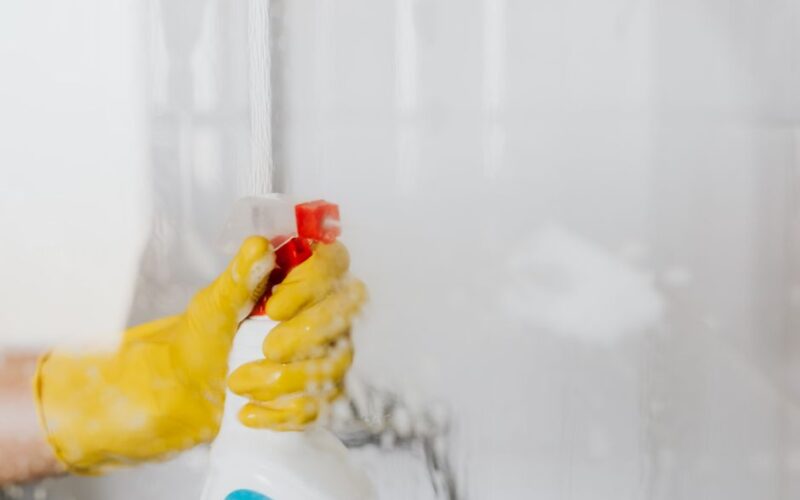
Pre-soak heavy buildup areas for 10-15 minutes while you prepare tools: spray shower tiles, tub, and the inside of the toilet bowl with appropriate cleaners and let them dwell. For mineral scale, use an acid-based product and allow 5-10 minutes; for soap scum, an all-purpose cleaner with 10-15 minutes dwell will loosen residue. Always test cleaners on a 4-inch square of tile or surface before wide use and ventilate for at least 5 minutes while they dwell.
Set up zones in your head so you move clockwise through the room: high shelves and lights, shower and tub, glass doors, sink and counter, toilet, then floor and entry. Assign a target time to each zone (for example, 8 minutes for dusting, 12-18 minutes for shower, 8-12 minutes for sink and mirror, 5 minutes for toilet, 6-10 minutes for floor) so you can monitor progress with a kitchen timer or stopwatch.
All-Purpose Cleaner
- 24-oz spray, 10-15 min dwell daily
- Best for: soap scum and counters
- Test 4-inch squares, vent 5 min
Acidic or Bleach-Based Cleaner
- Acid 5-10 min scale, bleach bowls
- Best for: mineral and mold zones
- Never mix, dwell then rinse
Compact Supply List
What to have within arm’s reach.
Use Two-Stage Cloths
Keep one cloth for glass, one for fixtures, and one for grimy surfaces to prevent spreading soil between zones.
Ventilation Matters
Run the exhaust fan and open a window; strong cleaners benefit from 5-10 minutes of airflow while they dwell and during rinsing.

Clean Efficiently by Zone
Work top to bottom so dust and drips move to areas you will clean later. Start with a 3-5 minute dusting of vents, light fixtures, and cabinet tops using a damp microfiber cloth or a small vacuum attachment; removing loose debris first prevents rework on the sink and mirror.
While the shower and tub have been soaking, spend 12-18 minutes scrubbing tiles, grout lines, and fixtures. Use a grout brush with short, firm strokes at a 45-degree angle to the grout line and work in 12-18 inch sections, rinsing the brush every 2-3 minutes. For stubborn grout stains, make a paste of 1/2 cup baking soda plus water to form a spreadable paste, apply down grout lines, let sit 5-10 minutes, then scrub and rinse. On acrylic or enameled tubs, use a non-abrasive pad and apply medium pressure; on ceramic tile, an acid-based cleaner applied for 5-10 minutes can reduce mineral scale—always test a 4-inch square first.
For glass shower doors, squeegee top to bottom in overlapping vertical passes about 2-3 inches apart, then wipe any remaining edge drips with a microfiber towel. Habit formation helps: a single 30-second squeegee pass per door after each use reduces buildup between deep cleans and saves 10-15 minutes on scrubbing day.
Move to the sink, countertop, and mirror for 8-12 minutes. Spray the sink and counters, let sit 30-60 seconds, then scrub around the faucet base and drain with a toothbrush for 30-60 seconds per trouble spot. For streak-free mirrors, mix 1 part white vinegar to 3 parts water in a spray bottle and wipe with a dry microfiber cloth in horizontal strokes; allow mirrors to air-dry 1-2 minutes for a spot-free finish.
Clean the toilet after other fixtures so you do not re-contaminate it. Apply a toilet-specific disinfectant inside the bowl and scrub for 1-2 minutes with a toilet brush, paying special attention under the rim. Allow external disinfectant sprays to remain wet for the product’s labeled contact time, typically 1-3 minutes. For stubborn rings, apply a bleach solution at approximately a 1:10 dilution (one part bleach to ten parts water) for 5-10 minutes, then flush and rinse thoroughly; always wear gloves and ensure 5-10 minutes of ventilation when using bleach.
Inspect caulk lines and grout edges as you work: if caulk is soft or pulling away for more than a 2-inch length, note it for later repair. Resealing a 3-foot tub edge typically takes 30-45 minutes including drying time if you plan to do minor caulk maintenance after cleaning. For larger repairs, factor a separate project day.
Finish with the floor: sweep or vacuum to remove hair and debris, then mop from the far corner toward the door in a 6-10 minute pass. Use the manufacturer’s dilution—commonly 1 capful of floor cleaner per gallon of water—or a neutral cleaner for sealed floors; change mop water if it becomes visibly dirty after 1-2 passes. For tile floors with grout, consider a second spot-scrub pass with a nylon brush on high-traffic grout lines and rinse within 2 minutes of scrubbing.
Put items back and do a 3-minute final check: replace fresh towels, align bathmats, and wipe light switches and door handles with a disinfecting wipe. Let the room air-dry for 10-15 minutes with the fan on to remove residual fumes and speed drying of grout and caulk lines. Take a final walk-through and note any areas that need deeper repair so they do not get left to the next cleaning cycle.
Structured timing and short zones keep the job fast without skipping steps.
A basic set of five tools handles most small-bathroom tasks efficiently.
Allow cleaners this dwell time to reduce elbow grease required later.
“Small bathrooms stay manageable when you use a repeatable routine and short timed blocks rather than irregular marathon sessions.”
— Field & Home Cleaning Guide

Frequently Asked Questions
Further reading: What Is the Right Way to Clean Stainless Steel Daily · How to Clean a Mattress and Remove Odors Naturally
Sources: EPA Safer Choice
One response