 Field & Home


The short answer: Prune apple trees annually to shape young trees and remove dead or crowded wood on mature trees. Formative pruning in the first 3 to 5 years sets scaffold structure; maintenance pruning afterward focuses on thinning and renewal and should remove no more than 20 to 30 percent of live canopy in a single winter.
Prune Young and Mature Trees
Formative pruning sets the long-term frame. At planting reduce the central leader to 24–36 inches above the graft and immediately identify 3 to 5 scaffold branches to become the permanent frame. Space scaffold branches about 6–12 inches apart vertically on the leader and aim for roughly 45–60 degree angles radially; these proportions help light reach interior fruiting spurs for the first 3 to 5 years.
When selecting scaffold candidates, choose shoots with bark ridges and outward-facing buds. If a candidate branch is less than one-third the diameter of the leader, shorten it by one-third to stimulate basal growth rather than choosing it; if it remains small, select a different scaffold the next season. Tie new scaffolds to a stake or espalier wire with a soft tie and check ties every 4 to 6 weeks during the first growing season to avoid girdling.
Staking and initial training: set a 3- to 4-foot hardwood or metal stake at planting and attach the leader so it reaches your chosen training height (24–36 inches for many systems). Use a single 1-inch-wide soft tree tie or stretch nylon tie, knotting loosely so it allows trunk swell; inspect and retie every 6 weeks during the first year and remove the stake after 12 to 18 months if the root system has established.
For established trees, follow a prioritized three-step sequence: 1) remove dead or diseased wood, 2) eliminate crossing or rubbing branches, and 3) thin to improve light and air movement. Remove small-to-medium branches at their origin rather than making multiple interior heading cuts. If you must reduce canopy size by more than 20 to 30 percent, plan staged reductions of about 15 percent in year one and a similar amount the following year to reduce stress.
Renewal pruning for older wood uses a staged approach: select one or two major scaffold branches to shorten by one-third back to an 8–12 inch vigorous lateral; this stimulates replacement shoots over the next 2 to 3 seasons. Avoid shortening more than one major scaffold per year on a mature tree to lower risk of sunscald and disease on exposed wood.
Spacing affects pruning choices: leave 20 to 30 feet between standard rootstocks, 12 to 15 feet for semi-dwarf, and 8 to 10 feet for dwarf trees. When planting, set the root flare level with the soil and avoid burying the graft; this reduces need for corrective pruning later and helps establish the leader height at planting.
For an illustrated planting and early-training checklist, see the detailed guide to plant bare-root apple trees which shows root flare, stake placement, and initial leader cuts with photos.
Key Structural Targets
Simple proportions and targets to check while pruning.
Branch collar cut
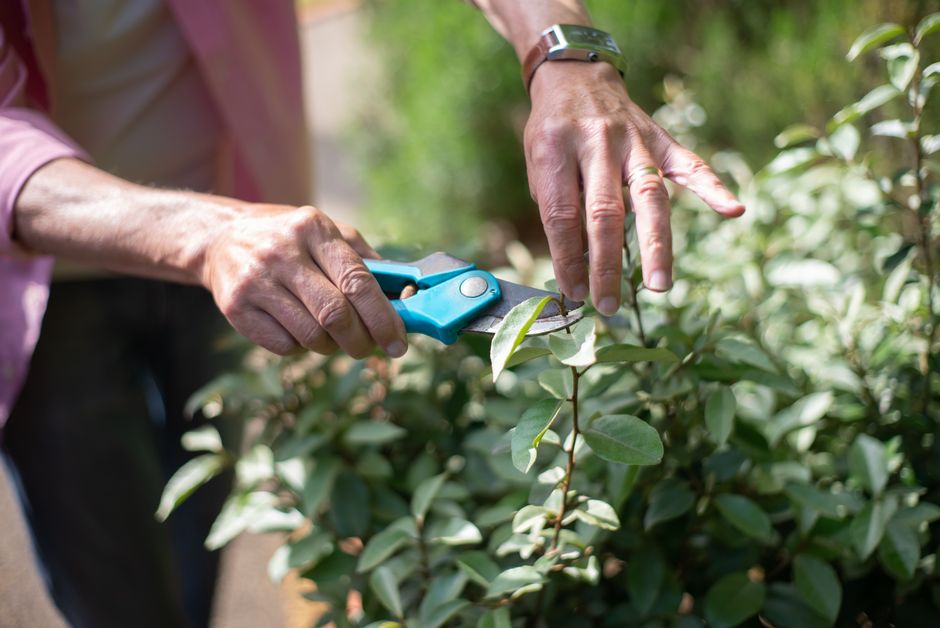
Always cut just outside the swollen branch collar without leaving a stub; a final cut should meet the collar without cutting it.
Tool disinfection
Use 70% isopropyl between diseased trees or a 10% bleach solution on blades for 30 seconds when fireblight or scab is present; rinse and dry after disinfecting.
Central Leader
- One leader to 24-36 in, tiers above
- Best for: small yards and ladders
- Scaffolds 3-5 at 45-60 deg
Open Center
- Vase of 3-4 limbs, open heart
- Best for: light-hungry old trees
- Cut outside collars, 20-30 pct max
Years to develop final scaffold architecture for most apple cultivars.
Portion of live canopy you should remove in a single dormant season on a mature tree.
“Prune to balance wood removal with fruiting potential: less is more on mature trees, while decisive shaping in the first three years pays off for decades.”
— Field & Home Horticulture Team
Timing and Cutting Technique
Frequently Asked Questions
Further reading: Planting Bare-Root Apple Trees · Why Do My Apple Trees Have Scabby Spots? Organic Fixes
Sources: UMN Extension