 Field & Home

The short answer: Control effort, cadence, and rhythm on climbs: aim for a slightly higher cadence (170–180 spm), use short run:walk cycles on long grades, and practice 6–8 hill repeats once per week to build durable uphill fitness.
Why Uphills Sap You
Hills force a rapid shift in how your body produces and uses energy. On a sustained incline your heart rate rises within 1–2 minutes, muscle recruitment shifts toward fast-twitch fibers, and oxygen demand increases; the result is a feeling of looming fatigue even if your perceived effort is steady. Many runners and hikers make it worse by lengthening stride, dropping cadence, or pushing too hard early on the climb.
Two concrete mechanical issues cause the most trouble: cadence collapse and inefficient stride. Cadence often falls by 5–10% on steep terrain, which increases ground contact time and the load on each step. That increases local muscle fatigue in the quads and glutes; once those muscles start to fail you resort to larger, slower muscle contractions that cost more oxygen and feel much harder.
Another common mistake is pacing by pace-per-mile alone. On a 5–7% grade your pace can slow 20–40 seconds per mile (or more) compared with flat ground, but effort—measured by heart rate or perceived exertion—should stay in a sustainable band. If you start a climb at flat-ground pace you will exceed sustainable effort and “blow up” in the middle of the hill.
Quick physiology
Cadence, effort, and rhythm numbers for climbs.
Drill 2 by 2 minutes
Twice weekly run 2 sets of 2 minutes at plus 10 spm with 2 minutes easy between to hold cadence uphill.
Walk climbs over 200 meters
Use 3 to 1 run-walk past 200 to 300 meters and 2 to 1 past 10 percent grade so power stays even.
Steady running
- Even effort at RPE 6 to 7 of 10
- Best for: short grades under 200 m
- Shorten stride 5 to 10 percent, lean ankles
Run-walk cycling
- 3 to 1 past 200 m, 2 to 1 past 10 percent
- Best for: long or very steep pitches
- Poles help past 12 percent and 10 minutes

Practical Pacing Fixes
1) Control cadence: aim for 170–180 steps per minute (spm) on ascents. If your flat-cadence is 160 spm, run short cadence drills—2 sets of 2 minutes at +10 spm with 2 minutes easy between—twice per week. Higher cadence shortens ground contact time, reduces braking forces, and spreads work across more muscle fibers.
2) Use a run:walk ratio for sustained climbs. For climbs longer than 200–300 meters try a 3:1 run:walk ratio (three minutes running, one minute walking) or a 4:1 when you want fewer interruptions. For very steep pitches (>10% grade) switch to 2:1 (two minutes running, one minute walking) to keep power consistent while preventing local muscle failure.
3) Pace by effort bands, not flat pace. Use perceived exertion (RPE) or heart-rate targets: keep ascending effort at roughly 70–85% of your threshold heart rate, or at 6–7 out of 10 on the RPE scale for sustained climbs. That typically translates to a pace 20–40 seconds per mile slower than your flat tempo pace on grades around 5%.
4) Structure weekly training to build uphill durability. Example week: one easy endurance run (40–60 minutes), one targeted hill session (6–8 repeats of 45–90 seconds uphill with equal recovery), and one long run (75–120 minutes) where 15–30% of the distance includes rolling climbs at easy effort. Repeat this plan for 4–6 weeks to see measurable gains.
5) Add strength and plyometrics twice weekly. Do 3 sets of 6–8 single-leg deadlifts and 3 sets of 8–10 step-ups per leg, with 90–120 seconds rest; add plyometric bounds (3 sets of 6 reps) to improve elastic power. Consistent strength work increases power-per-step so each stride costs less energy on long climbs.
6) Practice pacing on the hill you use most. Do one session per week on that ascent: after a 10-minute warm-up, perform 6 repeats of 60 seconds at controlled hard effort (RPE 7–8) with 2 minutes easy down or flat recovery. Track time-up and time-down; aim to reduce climb time by 3–5% over 4 weeks without raising RPE.
7) Small gait tweaks matter. Shorten stride by 5–10% on very steep grades, keep a slight forward lean from the ankles (not the waist), and focus on quick, light steps. Breathe rhythmically (two steps inhale, two steps exhale) to stabilize oxygen delivery and avoid breath-hold spikes that raise heart rate.
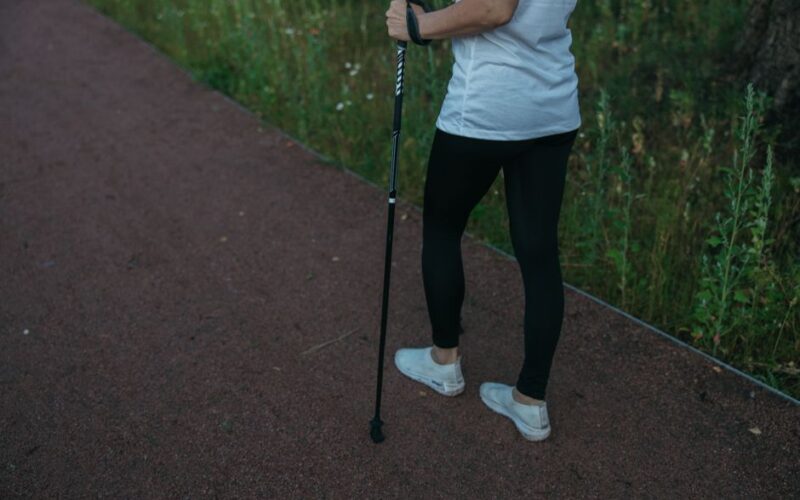
8) Gear and pacing aids. On trails, consider poles for sustained, steep climbs: poles can lower perceived exertion and move workload to the upper body, especially on grades over 12% and climbs longer than 10 minutes. If you use a watch with cadence and heart-rate feedback, set a cadence alert at your target +5 spm and a heart-rate zone to avoid overshoot on the first minute of the climb.
9) Test and adapt over 2–6 weeks. Track three metrics: average climb time, heart-rate drift (difference between start and 5-minute mark), and perceived effort. If climb time improves 3–10% while heart-rate drift falls by 4–8 beats, your pacing adjustments are working.

Frequently Asked Questions
Further reading: Road Shoes vs Trail Runners for Day Hikes · How to Layer for Mountain Weather That Changes Hourly
Sources: National Park Service