 Field & Home
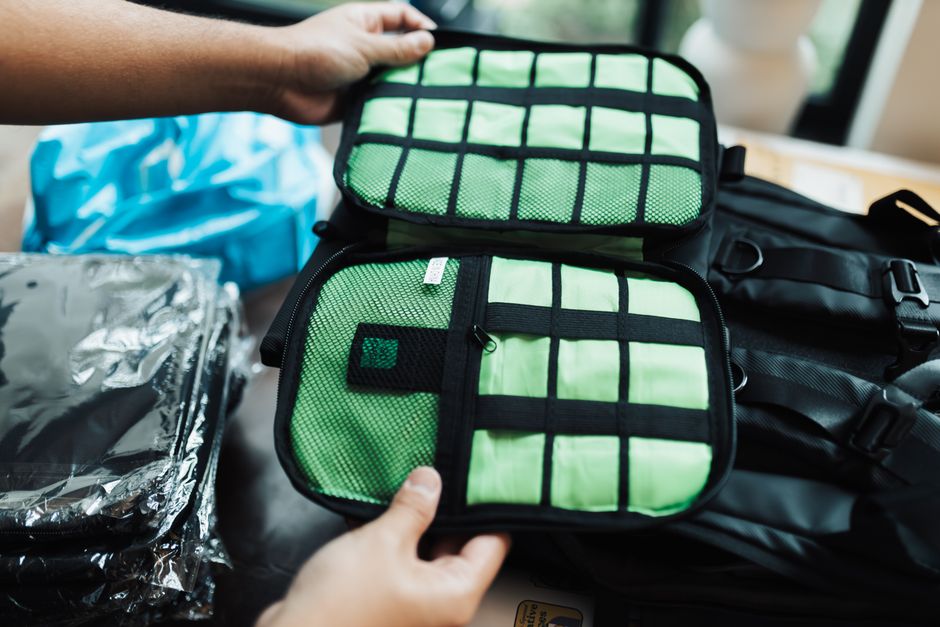
The short answer: Pack one 40-L carry-on for seven days with 7 garments, 2 shoes, 1 jacket, one 35x25x10 cm cube, one 25x15x8 cm cube, and a 12x10x5 cm toiletry pouch to stay under 9 kg and move through airports faster.
Packing Principles
Start by counting and limiting: pick a neutral color palette so 7 garments combine into multiple looks. A reliable split is 4 tops and 3 bottoms if you plan only minimal laundry, or 5 tops and 2 bottoms if you will wash midweek.
Select fabrics that dry and compress well. Merino and polyester blends typically dry in 6 to 12 hours when spun out and hung; cotton can take 12 to 24 hours. Choose items that list weights near 120 to 200 g for shirts and 250 to 350 g for lightweight pants so your clothing load stays in the 3 to 4 kg range.
Measure your bag’s internal volume before you pack: multiply internal length × width × depth in centimeters and divide by 1,000 to get liters (for example, 55 × 35 × 20 = 38,500 cm3 → 38.5 L). Use those numbers to confirm your cubes will fit—the 35x25x10 cm cube is about 8.8 L and the 25x15x8 cm cube is about 3 L.
Shoe strategy matters. Wear the bulkiest pair in transit and pack one smaller pair. Place shoes sole-to-sole inside cloth shoe bags and stuff socks or a t-shirt into each shoe to preserve shape and use around 200 to 300 g of dead space efficiently.
Packing cubes are organizing, not magic. Use the 35x25x10 cm cube for tops and any lightweight trousers, packed vertically so you can see each item; the 25x15x8 cm cube is ideal for 7 underwear and 3 socks. Roll shirts into 4–5 cm cylinders or fold to roughly 2 cm thickness so you can stack 6 to 8 shirts in a single cube.
Toiletries: keep liquids to three 100 ml containers or fewer. Swap glass for soft silicone bottles or solid bars to shave 100 to 300 g. A clear 12x10x5 cm pouch fits a 50 ml sunscreen, 50 ml shampoo, a 30 ml moisturizer, toothbrush, and a 20 g detergent sheet for sink washing.
Security and access: keep your toiletry pouch in an exterior pocket for quick removal; put documents and boarding passes in a dedicated pocket within arm’s reach. A small luggage scale that registers to 0.1 kg helps you confirm final weight—aim for 7 to 9 kg for comfortable carrying.
Pack for layering instead of packing for weather extremes. One light jacket (300 to 600 g) plus a long-sleeve top and a short-sleeve top gives you 3 temperature control layers without adding bulk. Wearing one layer while flying can free up 1.5 to 2 L of interior space.
Packing numbers that work
Counts and sizes for a 40-L week.
Cubes beat stuffing
Pack the 35 by 25 by 10 cm cube with clothes and the 25 by 15 by 8 cm one with extras; compression beats chaos every trip.
Wear the bulk
Board wearing the jacket and heaviest shoes; it frees roughly 2 kg of bag weight instantly.
“A small, repeatable formula removes decision fatigue and saves both space and time on the road”
—
Step-by-step Packing Plan
Stage 1 — inventory and decision (6 to 8 minutes): empty your bag and lay everything on a bed or table. Confirm counts: 4 tops + 3 bottoms or 5 tops + 2 bottoms, 7 underwear, 3 socks, 1 jacket, toiletry pouch, and 2 shoes. Remove any item that duplicates function or breaks your palette.
Stage 2 — measure and orient (2 to 3 minutes): check your bag’s internal dimensions and set cubes accordingly. Place the 35x25x10 cm cube lengthwise if your bag has a long compartment; leave a 1 to 2 cm gap in each cube so zippers close without resistance when the bag is full.
Stage 3 — fold and load tops (5 to 7 minutes): roll or fold shirts into 4–5 cm cylinders and stand them vertically in the larger cube for visibility. Fit 6 to 8 shirts depending on thickness; if you have two pairs of pants, fold each once and lay them flat along the cube’s base to create a stable platform for other items.
Stage 4 — small items and toiletries (2 to 3 minutes): place 7 underwear and 3 socks in the 25x15x8 cm cube; use one pair of underwear to wrap fragile items like chargers. Put the 12x10x5 cm toiletry pouch in an exterior pocket or the bag’s shallow compartment for 10 to 20 second access at security.
Stage 5 — shoes and weight balancing (3 to 4 minutes): insert shoes in cloth bags, tuck them at the bag base with toes toward the front. Keep heavier items near the bag’s back panel to lower the center of gravity and make rolling or lifting feel 30 to 40 percent easier. Wearing the jacket saves roughly 1.5 to 2 L inside the bag.
Stage 6 — electronics and swaps (2 minutes): if you need a 13 to 15 inch laptop, use a slim sleeve that sits in the laptop compartment without compressing cubes; to stay within 40 L, consider swapping one garment for the laptop or wearing a bulkier shoe to reduce packed volume by about 1 to 2 liters.
Stage 7 — final check and zippers (1 to 2 minutes): zip the bag and test zipper motion; if zippers stick, remove one small item or reposition a garment. Confirm passport and boarding pass in an easy-access pocket and weigh the bag on a 0.1 kg-precision scale at home so you avoid surprises at the gate.
Laundry plan and midweek refresh: pack a 20 g detergent sheet or a 20–30 g travel detergent packet and a 1.5 to 2 m travel clothesline plus 4 to 6 clothespins. On day 3 wash 2 to 3 lightweight items, wring them to remove excess water, then hang them; merino and synthetics dry in 6 to 12 hours indoors with airflow, so wash in the evening for morning use.
Outfit matrix example: with 4 tops and 3 bottoms you can create at least 8 distinct outfits by pairing each top with different bottoms and layering with the jacket. An example capsule: 2 long-sleeve tops, 2 short sleeves, 1 pair of jeans, 1 pair of chinos, 1 pair of travel trousers; mix and match to hit 8 combinations with at least 1 dressier option.
Emergency and repair kit: tuck a small zip bag with a 1.5 meter tape measure, 3 safety pins, 2 spare buttons, and a 10 g sewing kit into an internal pocket—this adds only 30 to 50 g but saves time if a hem or seam fails.
Frequently Asked Questions
Further reading: What Size Fireproof Home Safe Do Your Documents Actually Need? · Why Are Mornings Chaotic? Taming Phone Notifications
Sources: This Old House