 Field & Home

The short answer: Blackberry Foraging: pick ripe blackberries gently, harvest only from public or permitted land, wear gloves and eye protection, and cool fruit within 2 hours to preserve flavor.
When and Where to Pick
Blackberry season runs most commonly from mid-July through September depending on latitude; in many temperate regions peak ripeness is a 4 to 6 week window. Look for fully black, plump berries about 8 to 20 millimeters across; red or dark red berries are not yet ripe and will be sour.
Seek hedgerows, forest edges, and abandoned fields where sunlight reaches the canes for at least 6 hours per day. Stay at least 10 meters from road edges when possible to avoid vehicle-borne contaminants and pick at least 20 meters away from livestock pens or treated fields.
Confirm access rules before you pick. On public rights-of-way you may harvest for personal use but avoid fenced private property without permission; when in doubt ask landowners or check municipal ordinances. For organized foraging on private parcels get explicit permission and note any restricted zones.
Identify brambles by leaves grouped in threes or fives, arching canes with stout thorns, and cluster-shaped fruiting tips. To distinguish edible blackberry (Rubus fruticosus aggregate) from similar plants, note the aggregate drupelets that detach easily when ripe and the absence of milky sap when leaves are crushed.
Watch for lookalikes and local hazards. In some regions bittersweet nightshade or invasive raspberry hybrids can appear similar; if a berry stains your finger dark and separates cleanly with a gentle roll it is usually a blackberry. Avoid patches with chemical smells, dead vegetation, or visible animal droppings within 5 meters of the plants.
Plan your outing with timing and capacity in mind: aim for 30 to 90 minute sessions per patch to reduce trampling and plant stress, and bring a target harvest limit such as 2 to 3 kilograms per person to help avoid overharvesting single patches.
Quick safety checklist
Season, size, and distance rules for clean picking.
Roll-test every berry
Ripe drupelets detach with a gentle roll and no milky sap; red fruit stays on the cane.
Cap sessions at 90 minutes
Pick 30 to 90 minutes per patch toward 2 to 3 kg so canes and neighbors survive the season.
“If a berry resists when you roll it between thumb and forefinger, it needs another day or two; ripe fruit comes away clean with minimal force.”
—
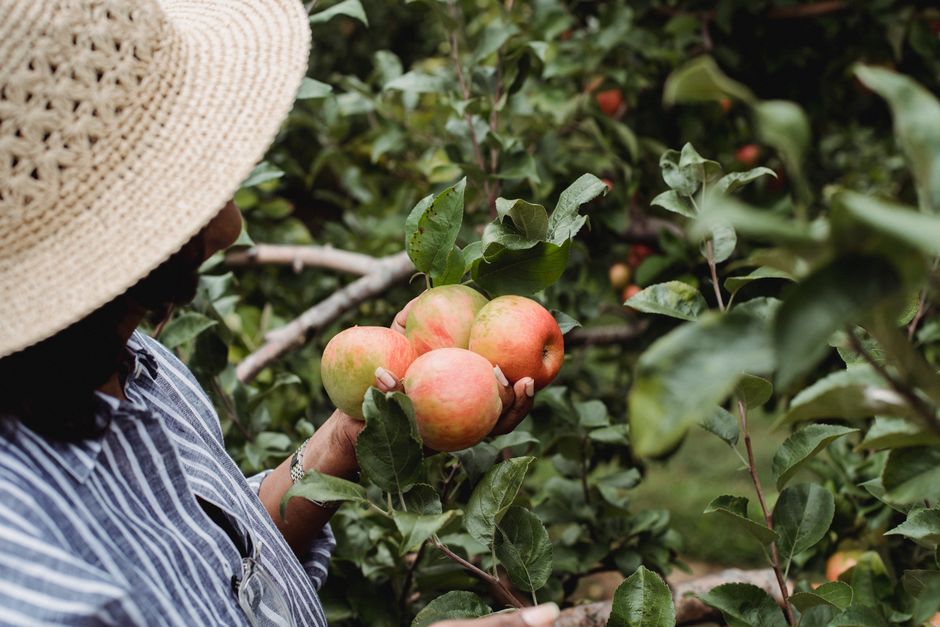
Harvesting and Handling Tips
Harvest by hand using a shallow container: a 1 to 2 liter basket or a pint basket (roughly 300 to 350 grams capacity) keeps berries from being crushed. Do not overfill; keep the pile height under 2 inches to avoid squashing the lower fruit.
Use gloved hands or thin leather gloves to protect from thorns and bramble scratches. For dense or high clusters, a pair of small pruning shears makes a clean cut and reduces cane damage; trim with a 1 to 2 centimeter stem where practical to keep berries intact.
Pick only fully black drupelets that detach easily; a ripe blackberry will release with a gentle downward roll. Sort onsite: discard visibly damaged, moldy, or insect-eaten fruit into a compostable bag to avoid contaminating the rest. Target no more than 2 to 3 kilograms per person per outing to minimize overharvesting in one patch.
Follow a simple picking sequence to speed work and protect plants: (1) inspect the fruit cluster from below to check for ripeness and pests, (2) cup the cluster in your palm, (3) roll the ripe berries downward with your thumb while supporting the stem with your forefinger, and (4) place berries gently into a single-layer basket. Repeat on one cane before moving 2 to 3 meters to a fresh area to avoid stripping an entire patch at once.
After picking, move fruit into a shaded area within 10 to 15 minutes to avoid heat exposure. If you cannot refrigerate within 2 hours, keep berries in the coolest available place and spread them in a single layer on a tray to prevent packing heat into the pile. When transporting, use a ventilated carrier or a small cooler with an ice pack set outside the berry container to keep the temperature near 4 degrees Celsius.
Rinse only just before use. To clean, place berries in a colander and rinse with cool running water for 10 to 20 seconds; avoid long soaks that leach flavors. For longer storage, freeze in a single layer on a tray for 2 to 4 hours then transfer to freezer bags; frozen blackberries keep well for up to 12 months.
For fresh use, refrigerate berries at or below 4 degrees Celsius and consume within 2 to 3 days for best texture and flavor. When making jam, a common ratio is about 1 kilogram of berries to 800 to 900 grams of sugar for a standard preserve; typical small-batch jam cooks for 10 to 20 minutes after reaching a rolling boil, but follow a tested recipe and safe canning steps for the exact time and pH requirements.
Consider alternative preserves: to make berry syrup, simmer 500 grams of berries with 250 milliliters of water and 200 to 300 grams of sugar for 10 to 15 minutes, strain, and cool; for dehydrating, spread berries halved on trays at 57 degrees Celsius and dry for 8 to 12 hours until leathery.
Leave at least one third of the fruit on a healthy patch for wildlife and plant regeneration. If you plan repeat visits, rotate patches and allow at least 2 to 3 weeks between visits to let late fruit ripen and birds to feed.
Frequently Asked Questions
Further reading: Calm Lake Kayaking: A First-Timer Safety Guide · How to Bike Safely with Young Children
Sources: National Park Service


One response