 Field & Home

The short answer: Calm Lake Kayaking: prioritize a stable boat, a properly fitted PFD, a 10–30 minute on-land practice session, and a planned 0.5–2 mile route so your first outing stays safe and fun.
Preparing for Your Paddle
Start by matching equipment to the environment. For calm lakes choose a recreational sit-in or sit-on-top kayak 9–12 feet long and 24–30 inches wide; these sizes trade speed for stability and are easier to turn at slow speeds. If you’re 5’4″–6’2″ aim for a paddle 210–230 cm long; a paddle too short will wear your shoulders, while too long makes strokes inefficient. Bring a spare dry bag sized 5–10 liters for snacks, phone, and keys and seal it in your hatch or under bungees.
Personal flotation devices (PFD) are non-negotiable: pick a Type III or equivalent with a snug torso fit and a crotch strap if you rent sit-on-top kayaks. Check that you can lift both arms to eye level without the PFD riding up; that test takes 30–60 seconds but prevents slippage in the water. If the PFD is adjustable, tighten the straps so the device sits high on your chest yet allows full breathing and rotation.
Dress for the water temperature, not the air. On calm lakes, a lightweight synthetic layer and a splash jacket suffice above 60°F; below 60°F use a neoprene top or a 2–3 mm wetsuit and a quick-dry base layer. Avoid cotton: when wet it chills you rapidly. Wear water shoes with thin soles and a heel strap, and attach a leash to sunglasses or use a retainer; small gear losses on flat water often happen within 5–20 feet of shore during launches.
Assemble a simple safety kit in an easily reachable pocket: whistle on a lanyard (audible 100–200 yards), a paddle float or spare paddle, a bilge sponge for sit-ins, a small first-aid kit (bandages, antiseptic wipes), and a waterproof headlamp if you might be out within one hour of sunset. Pack water: plan at least 0.5 liter per hour per person and an extra 0.5 liter for contingencies on a 2-hour trip.
Before you leave the parking area spend 10–30 minutes practicing basic strokes and the cockpit fit. Sit in the kayak on a stable surface, check seat comfort, adjust foot braces so knees have light contact with the hull, and practice forward stroke, sweep stroke, and a reverse stroke on dry land. These five to ten repetitions build muscle memory and reduce the chance of overcompensating after launching.
Essentials checklist
Boat, paddle, and water numbers for calm lakes.
Test the PFD in 60 seconds
Lift both arms to eye level; if the vest rides up, tighten until it stays high yet breathes.
Drill 10 to 30 minutes ashore
Practice forward, sweep, and reverse strokes on land before launching past 5 to 20 feet of shore.
“Start near shore and make your first crossing no longer than 0.5 mile until you know how your boat tracks and how the wind affects it.”
—
On-the-Water Safety & Skills
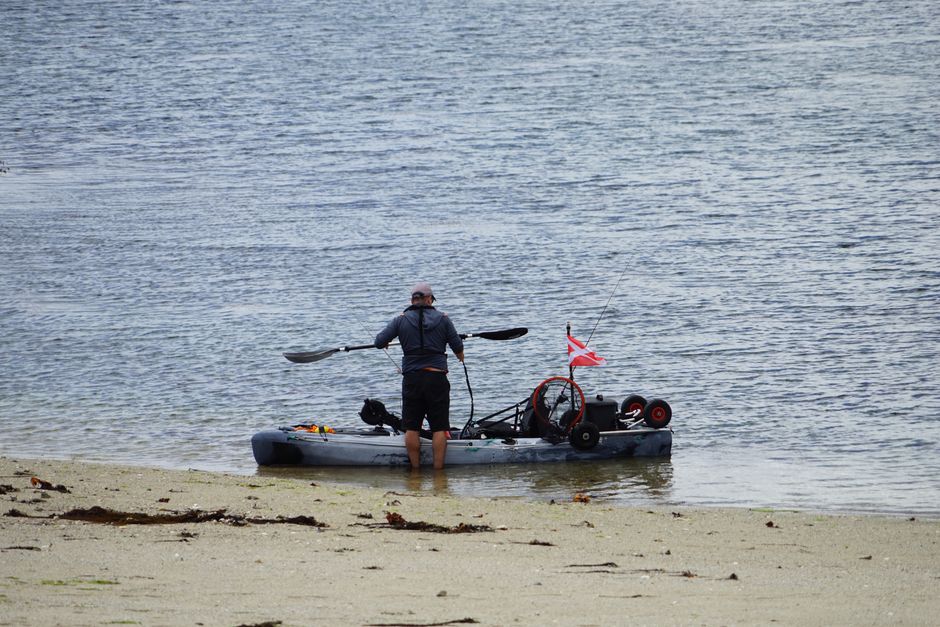
Launch from a shallow, clutter-free spot. For sit-on-top kayaks step on with one foot, swing your other leg over, and sit down; for sit-ins, place the paddle on the shore across the cockpit, sit on the rear deck, slide in feet-first while bracing with hands, then position your paddle. Take 1–3 practice forward strokes while keeping a hand on shore to confirm stability before pushing off. If the wind is above 8–12 mph, avoid long crossings and hug the leeward shoreline where possible.
Use a relaxed forward stroke: reach forward one arm-length, rotate your torso toward the paddle, plant the blade near your toes, and pull the blade along the hull to the hip; repeat in steady sets of 8–12 strokes per side. To turn effectively use a sweep stroke: extend the paddle out and make a wide arc from bow to stern; 3–4 sweep strokes will pivot a recreational kayak 45–90 degrees depending on length. Practice these until you can execute them without looking at the blade—this usually takes 10–20 minutes of repetition.
If you capsize in a sit-on-top, climb back on the boat by kicking and using a grab loop at the stern; this usually takes 30–90 seconds if you stay calm. For sit-in kayaks, practice assisted re-entry with a partner using a paddle float or practice a wet exit on land first so you know how to pull the spray skirt and clear the cockpit. Never attempt to re-enter alone in waves over 1–2 feet; instead, swim to shore if necessary, towing the kayak with a towline no longer than 8–10 feet to avoid entanglement.
Plan conservative routes for your first trips. Pick a loop under 2 miles or an out-and-back of 0.5–1 mile that takes 30–90 minutes at a relaxed pace; factor in an average paddling speed of 2–3 mph for beginners. Check a reliable weather source within 1–2 hours of launch and watch for increasing wind, sudden temperature drops of 10°F or more, or fast-building thunderstorms—if conditions change quickly, head to the nearest safe shore immediately.
Use simple communication and positioning: keep your partner within 50–100 yards, use whistle blasts (one blast to gain attention, three blasts for an emergency), and agree on turn-back points measured in landmarks or time intervals (for example, halfway point at 30 minutes). These measures limit exposure and make it easier to shelter quickly if the wind picks up unexpectedly.

Frequently Asked Questions
Further reading: Blackberry Foraging: Responsible Summer Picking Guide · How to Bike Safely with Young Children
Sources: National Park Service


One response