 Field & Home
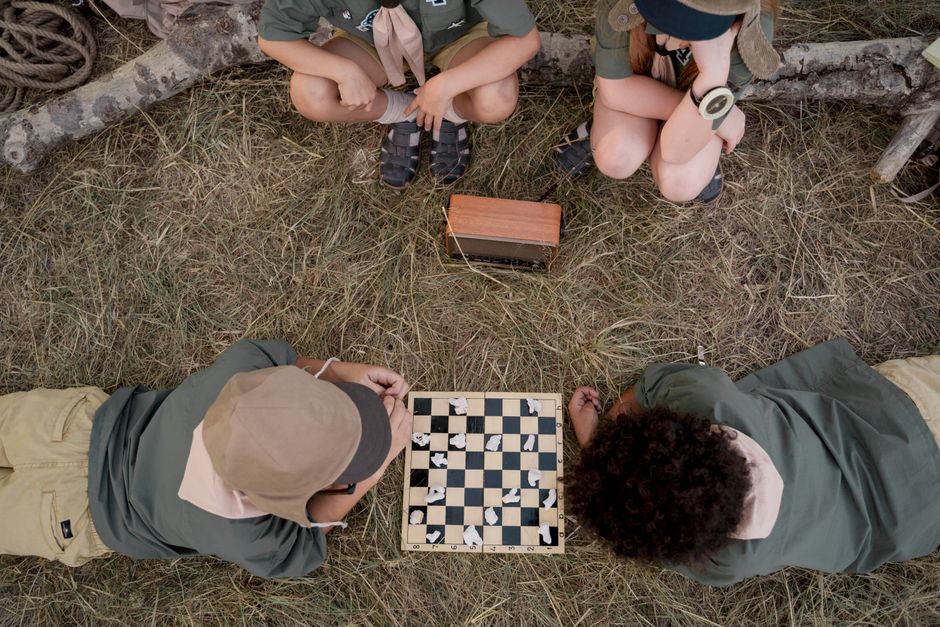
The short answer: Get kids playing outside: ten low-prep, screen-free camp games with materials lists, step-by-step setup, typical player counts, and round lengths so you can run each game confidently.
Before You Head Out
Pack a small kit for every session: a soft ball, 6 cones or marker stones, a whistle, a 30-foot rope or 10-meter tape, and a small first-aid kit. Put items in a labeled tote so setup takes under 3 minutes at each new campsite or clearing. For teams, bring 6 colored bandanas or cones to mark sides.
Consider safety and shade: choose a flat area at least 20 by 30 feet (6 by 9 meters) for most games, and scout for tripping hazards for 2 minutes before play. For water or nature-based games, bring 1 garbage bag for waste and 1 cloth for drying hands.
Set clear timeboxes: plan 2 to 3 rounds of 10 to 20 minutes per game, with 3 to 5 minutes for explanation and transition. For ages 4–6, shorten rounds to 5–8 minutes; for ages 7–12, aim for 10–20 minutes per round. Always name one adult leader per 6 children for supervision.

Ten Easy Camp Games
1. Shadow Tag. Best for sunny days with 6–12 kids and a flat 30 by 20 foot area. One player is It, and instead of touching, they step on another player’s shadow to tag them. Play 2-minute rounds with a 30-second cooldown; rotate It every round. No equipment needed and ideal for ages 5 and up.
2. Capture the Flag, Small-Field Version. Use a 40 by 60 foot field and divide into two halves with cones. Each team hides a small flag or bandana within its half—mark a 5-foot safe zone around each flag. Play 15-minute halves or until a flag is captured; teams of 4–8 work best. Rules: tagged players return to their baseline for a 10-second count-out before rejoining.
3. Backpack Relay. Create two teams of 3–6 players. Each team has a backpack filled with 6 lightweight items (water bottle, hat, map, plastic cup, spoon, small toy). Set a 50-foot course and run in 30-second legs: player A runs out and back, transfers backpack, then player B goes. Do 6 legs for one full relay; typical run time is 8–12 minutes including transitions.
4. Nature Bingo. Prepare 12-card bingo sheets with common items: pine cone, feather, round pebble, ladybug, 3-leaf stem, bird song. Give each child a sheet and a pencil; allow 15 to 25 minutes for a scavenger hunt. Limit collection to one of each item and require photos for fragile finds. For ages 4–10, pair younger children with an adult for a 1:3 supervision ratio.
5. Flashlight Freeze (evening). Use a 30 by 30 foot clearing and one handheld flashlight. One leader is the searcher with the light; others move while the light is off and freeze when it scans them. If caught moving in a beam, a player does a 10-second freeze. Run 3 rounds of 8 minutes each; excellent for 6–12 kids ages 6 and up.
6. Trail Treasure Hunt. Hide 8 small markers along a 200–400 foot loop trail. Give teams a simple map with 8 numbered checkpoints and a time limit of 20 minutes to find as many markers as possible. Each found marker earns 1 point; the highest score after 20 minutes wins. Teams of 2–4 children balance speed and navigation practice.
7. Human Knot. Best with 6–10 players standing in a tight circle. Each child grabs the hands of two different people, then untangle without letting go. Time the activity: aim for 5–10 minutes per session. If the knot won’t release after 8 minutes, allow a single cut or one person stepping out to simplify. Great for cooperative problem solving for ages 7 and up.
8. Quiet Birdwatch. Sit in small groups of 2–4 for a 10-minute silent observation period with a simple checklist of 6 local birds or sounds. Use a 2-minute debrief to ask which bird was most common. Encourage note-taking or simple sketches; suitable for ages 5+ with one adult per 6 children for supervision.
9. Stick Limbo. Use two poles or long sticks set at an initial height of 24 inches (60 cm). Players limbo under in single file; lower the stick by 2 inches (5 cm) after each successful full rotation. Continue for 5 to 10 minutes or until one player remains. Perfect for small clearings and helps with balance and flexibility for ages 6 and up.
10. Team Map Maze. Create a simple maze with cones or natural markers in a 20 by 20 foot square. Give one child the map and blindfold two teammates; the map holder directs them verbally to retrieve a small object in the center. Each run lasts about 3 minutes; do 4 runs per group. Teams of 3–5 teach communication skills and trust.
Frequently Asked Questions
Further reading: How to Find Free Dispersed Campsites on Public Land · Bear Bags: Hanging Camp Food the Right Way
Sources: National Park Service